
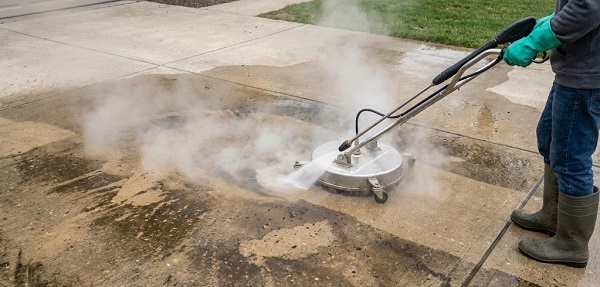
Hot water concrete cleaning is one of the fastest ways to brighten a driveway, patio, sidewalk, or commercial slab—especially when the stain is oily, sticky, or ground in. When cold-water pressure washing and store-bought cleaners keep leaving “ghost” stains, adding heat often does what chemicals can’t: it loosens the bond between the stain and the concrete so it can be lifted out instead of just smeared around.
Below, I’ll explain when heat beats chemicals, which stains respond best, when you still need targeted treatments, and what a professional hot-water cleaning process looks like.
Why heat works on deep concrete stains
Concrete is porous. Oils and grime can migrate into the pores and cling to the surface. Cold water under pressure removes loose soil, but it struggles when the contaminant is thick (motor oil), waxy (gum), or embedded as traffic film.
Heat helps because it:
- Reduces viscosity so oils flow and lift more easily
- Improves rinsing/emulsification (often with less detergent)
- Softens sticky residues like gum and adhesive spills
The result is faster cleaning with less temptation to “crank up” PSI and risk etching.
Stains where hot water usually beats chemicals
Oil and grease spots
Driveways, garage aprons, and parking pads collect drip stains that have had months to soak in. Hot water can liquefy oily residue and pull it up with agitation, reducing reliance on harsh solvents.
Restaurant pads and dumpster areas
Animal fats and fryer oil create a slick, dark film—especially in cooler weather. Heat is a big advantage because fats respond dramatically to temperature.
Tire marks and traffic film
Those dark drive-lane shadows are often a blend of rubber, road oil, soot, and fine grit. Hot water helps soften that film so it releases instead of smearing.
Chewing gum and sticky spills
Cold water can shred gum into a mess. Hot water removes it faster and typically with less surface damage risk than over-pressure blasting.
When chemicals still matter (even with hot water)
Some problems are chemical issues more than temperature issues:
- Rust stains (fertilizer, metal furniture, irrigation water) usually need a targeted rust remover.
- Efflorescence (white mineral haze) is a mineral deposit issue and may require a different approach.
- Organic growth (algae, mildew) is best handled with proper treatment and dwell time, then a rinse.
- Paint, sealers, and coatings often need stripping methods, not just washing.
Best practice: match the stain to the tool—heat for oils/sticky residues; specialty chemistry for mineral or biological staining.
What “hot water” means in professional cleaning
Most professional hot-water units run roughly 160°F–210°F at the machine, depending on the system and conditions. That temperature range is hot enough to soften oils and release grime, but technique still matters—pressure, nozzle distance, and thorough rinsing are what turn “better” into “best.”
What professional hot-water concrete cleaning looks like
At Carolina Power Washing, the goal is to remove staining without damaging the slab or creating runoff problems. A typical workflow looks like this:
- Inspect and identify stains (oil vs. rust vs. organic vs. paint).
- Pre-wet and protect nearby surfaces and landscaping.
- Pre-treat only if necessary (biodegradable degreaser + light agitation for grease-heavy areas).
- Hot-water surface cleaning for consistent results and less striping.
- Detail edges and joints, then final rinse and evaluation.
If you want to see what’s included and when hot water is used, check our Concrete Cleaning service page.
Hot water vs. “more pressure” (and why pressure isn’t the answer)
Turning PSI up is how concrete gets damaged. Over-pressure can etch the surface, expose aggregate unevenly, and leave permanent wand marks. Heat often lets you use appropriate pressure and still get a stronger result—especially on oil-heavy slabs.
Set realistic expectations with old stains
A fresh spill is usually straightforward. A stain that has baked into a driveway for years is different. Even with hot water, you may see a big improvement but a faint shadow that’s more visible after drying. That’s normal when staining has penetrated below the top layer. When a “like-new” finish matters, a follow-up treatment or targeted spot strategy may be recommended.
After-care that keeps concrete cleaner longer
- Sweep/rinse occasionally so soil doesn’t grind into the pores.
- Address oil drips early with absorbent material first, then cleaning.
A quick note on wastewater and runoff
Concrete cleaning creates wastewater that can carry oils and fine sediment. If you’re cleaning near a storm drain, plan for containment and proper disposal. For a plain-English overview, reference the EPA stormwater resources.
DIY vs. pro: a quick rule of thumb
DIY works well for light soil. Call a pro when:
- The stain is petroleum-based and has been there for months/years
- The area is large (driveways, pool decks, commercial pads)
- Runoff must be managed (near storm drains or interior parking)
- You’ve tried cold-water washing and the stain keeps returning
Carolina Power Washing is a professional, insured exterior cleaning team serving homes and businesses from Rock Hill, SC and the surrounding Charlotte metro area. Founded in 2010 by Ray and Lindsey Egner, the company has built its reputation on quality work and attention to detail.
Quick FAQs
Is hot water safe for concrete?
Yes, when applied correctly with proper pressure and technique. Damage usually comes from excessive pressure or poor wand control.
Will hot water remove every oil stain completely?
It can dramatically improve most oil spots, but very old stains may not disappear 100% in one treatment because they’ve penetrated deep into the pores.
Can you clean new concrete with hot water?
New concrete should be fully cured before aggressive washing. If your slab is new, a pro can advise the safest timeline and method.
Bottom line
If the stain is oily, sticky, or traffic-ground, heat is often the cleanest path to deep stain removal—with fewer harsh chemicals and less risk than trying to “muscle” it out with pressure alone. For rust, minerals, or organic staining, the right targeted treatment is usually the real fix.
Need help deciding what your concrete needs? Carolina Power Washing can recommend the best approach—hot water, targeted treatment, or both—based on what’s actually on the slab.