
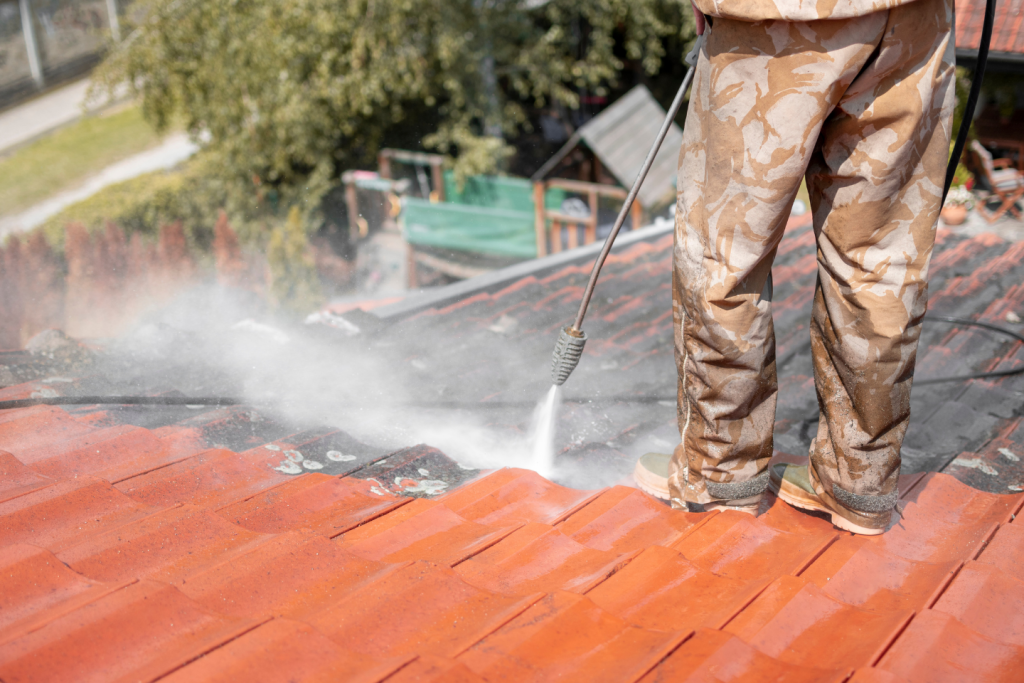
Dark streaks across a roofline are more than an eyesore. They often signal algae, moss, or mildew feeding on the surface above your home. Choosing between pressure washing vs. soft washing for roofs is one of the most important decisions a homeowner in Rock Hill can make, since the wrong method can crack tiles, strip coatings, or shorten the life of your roof. This guide from Carolina Power Washing walks through safe cleaning techniques for every roof type, so you can protect your home through the season ahead.
Why Roof Cleaning Method Matters
A roof faces sun, rain, pollen, and shifting temperatures all year. In Rock Hill, humid air speeds up the growth of algae and moss, especially on shaded sections of the roof. Cleaning removes this buildup, but the method used decides whether your roof stays protected or ends up damaged.
Roofing materials react differently to water pressure:
- Asphalt roofing — Layers can lift or wear away under strong force.
- Tile roofing — Individual pieces can crack or shift out of place.
- Metal roofing — Coatings and seams can wear down with repeated high pressure.
- Flat roofing — Membranes can tear or loosen at the seams.
Understanding pressure washing vs. soft washing for roofs starts with knowing how each material responds to water force.
What Is Pressure Washing?
Pressure washing sends a strong, direct stream of water at a surface. This method works well for hard, flat ground surfaces such as driveways and walkways.
On a roof, high pressure creates real risk. The force can:
- Strip protective granules from asphalt roofing
- Crack or dislodge tile pieces
- Damage seams and coatings on metal panels
- Push water under flashing and into the structure below
Because of these risks, most roofing professionals avoid pressure washing on roof surfaces and reserve it for ground-level cleaning instead.
What Is Soft Washing?
Soft washing uses low water pressure paired with a cleaning solution designed to break down algae, moss, and mildew. The solution does the work, while the rinse simply clears it away.
Soft washing benefits roofs in several ways:
- Removes algae and moss at the root instead of just the surface
- Protects granules, tiles, and coatings from force damage
- Reaches shaded, damp areas where growth tends to start
- Slows regrowth, keeping the roof cleaner for a longer stretch
For most homes in this region, soft washing stands as the safer, more effective choice for roof care.
Safe Techniques by Roof Type
Each roofing material calls for its own approach. Here is how professionals handle common roof types across Rock Hill:
Asphalt Roofing
- Use soft washing with a low-pressure rinse.
- Apply a cleaning solution made for organic growth like algae and moss.
- Avoid any high-pressure equipment, since it can strip protective granules.
Tile Roofing
- Use soft washing to avoid cracking or shifting tile pieces.
- Clear debris from valleys and edges by hand before rinsing.
- Check underlying layers for damage once the surface is clean and visible.
Metal Roofing
- Use soft washing to protect seams and painted coatings.
- Rinse with care around fasteners and joints.
- Address rust spots separately, since standard cleaning solutions may not fully clear them.
Flat Roofing
- Use soft washing at a gentle setting to protect the membrane.
- Clear standing water and debris before treatment begins.
- Inspect seams closely, since flat roofs are prone to hidden leaks.
How Professionals Decide Which Method to Use
A trained roof cleaning crew studies the property before choosing a technique. Key factors include:
- Roof material — Each type has its own tolerance for pressure.
- Age and wear — Older roofs often need a gentler approach.
- Type of buildup — Algae and moss need a treatment, not just a rinse.
- Roof slope and access — Steep or complex roofs require careful handling to avoid safety issues.
This review step protects your roof and keeps the cleaning process safe for everyone involved.
Seasonal Timing for Roof Cleaning
Late summer and early fall mark a strong window for roof care in South Carolina. Algae growth peaks during the humid months, and dark streaks become easy to spot against a clear sky. Cleaning now clears buildup before cooler, wetter weather sets in.
A clean roof also handles fall storms and winter moisture better than one coated in algae and debris. Regular care through the year keeps small problems, such as trapped moisture or early rust, from turning into larger repairs.
Benefits of Choosing the Correct Method
Selecting the right roof cleaning approach protects your investment and your home. The right method can:
- Prevent cracked tiles, lifted granules, and torn membranes
- Remove algae and moss that trap moisture against the surface
- Extend the working life of your roof
- Improve curb appeal for the entire property
- Lower the chance of costly repairs later
A roof cleaning service in Rock Hill built around your specific roof type gives you the protection your home needs without the guesswork.
Protect Your Roof the Right Way
Pressure washing vs. soft washing for roofs is not a question with one answer for every home. Asphalt, tile, metal, and flat roofing each need a different level of care, and choosing the safer, low-pressure method keeps your roof strong for years to come.
Get started today with a roof review built around your material and the season ahead. The team at Carolina Power Washing studies every roof before cleaning begins, so your home stays protected while every trace of algae, moss, and grime disappears.